By Dr. Gordon “Bud” Johnston
About 395 million years ago in the Silurian Period, alumina rich clay sediment was deposited in a shallow, closing ocean. In time the material became approximately 5,000 feet deep. At this point the heat and pressure from the overlying material converted it to slate. About 15 million years later the pressure and heat from a continental collision crumpled and folded the slate into a series of fine grained and course grained mica schists.
By the later part of the Devonian Period, molten magma intruded into these schists forming what are known as plutons composed of biotite granite, gneiss and pegmatite (coarse-grained granite). These plutons occurred some 9 to 12 miles below the surface bedrock.
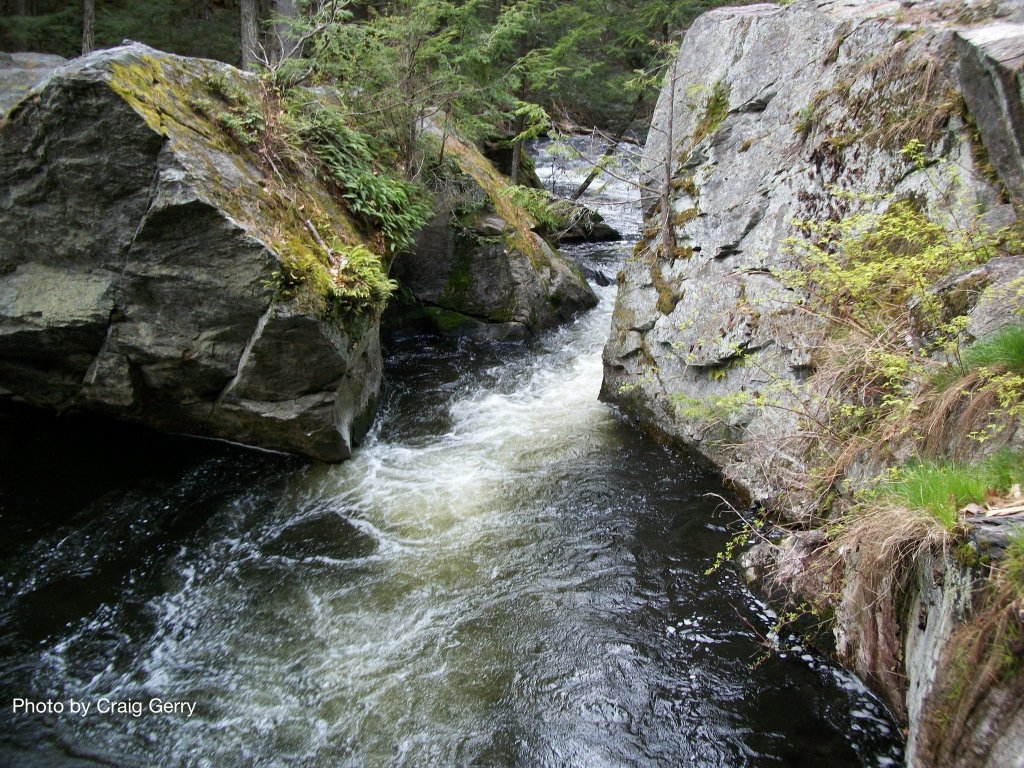
After that a long uninterrupted period of erosion of the rock surface followed by at least four separate glacial episodes took place. The combination of these forces stripped away much of the bedrock, exposing part of a pluton at Indian’s Last Leap. Here a granite ridge crossed the valley of glacial Mousam River and became a dam over which a torrent of melt water flowed with the sand, gravel and rocks it carried.
The present rock formation and gorge are attributable to a feature of granite called faulting or jointing. When granite is relieved of the weight of overlying rock it tends to crack in two or more planes. When the glacier moved through here it rounded the top of the ridge and plucked 4 foot high blocks from the Route 109 side of the present day river in step-wise fashion where the jointing tended to be more horizontal. This created a series of step falls. In the meantime a vertical joint or crevice on the right side was large enough to let water through. The constriction focused the erosive power of the materials in the water on its walls so the crevice was rapidly widened into a trough and then a gorge. Eventually the bed of the gorge was eroded below the top of the step falls and from then on the gorge took the full flow of water.
It must have been quite a sight some 14,000 years ago when water cascaded over the steps and flowed in a plume from the crevice.
 Mousam Way Land Trust